

Heirloom Body Care
Sodium Citrate
Sodium Citrate
Couldn't load pickup availability
Sodium Citrate is a water-soluble chelating agent used in cold process soap, liquid soap and cosmetic formulations. It binds metal ions such as calcium, magnesium and iron, helping improve product performance and reduce the effects of hard water.
In soap making, Sodium Citrate is particularly useful for reducing soap scum, supporting lather performance and helping maintain the quality of finished soap bars.
Benefits & Applications
- Reduces soap scum: Binds calcium and magnesium ions that contribute to soap residue in hard water.
- Supports lather performance: Helps soap perform more effectively in hard water.
- Improves formulation stability: Binds trace metal ions that can contribute to discolouration and oxidation.
- Easy to incorporate: Dissolves in water and can be added directly to the water phase.
- No additional lye required: Unlike citric acid, Sodium Citrate does not consume sodium hydroxide during soap making.
Recommended Usage
Cold Process Soap
Sodium Citrate is commonly used at approximately 0.5–2% of the total oil weight in cold process soap. Higher amounts may be appropriate for some formulations, but should be evaluated through testing.
How to incorporate:
- Weigh the required Sodium Citrate.
- Dissolve it completely in the water allocated to your soap formulation.
- Add sodium hydroxide according to your normal soap-making procedure.
- Continue with your usual method.
Always follow appropriate safety precautions when handling sodium hydroxide.
Cosmetic Formulations
Sodium Citrate may be used as a chelating agent and as part of a citric acid/sodium citrate buffering system in suitable water-based formulations.
The required concentration depends on the formulation and intended function.
Replacing Citric Acid in Soap Making
Sodium Citrate can be used in place of citric acid when the purpose is to introduce citrate as a chelating agent.
For anhydrous citric acid, multiply the citric acid weight by approximately 1.53 to calculate the equivalent amount of Sodium Citrate Dihydrate.
Conversion examples:
- 10 g citric acid = approximately 15.31 g Sodium Citrate Dihydrate
- 20 g citric acid = approximately 30.62 g Sodium Citrate Dihydrate
- 30 g citric acid = approximately 45.92 g Sodium Citrate Dihydrate
Important: These conversions apply to anhydrous citric acid. Citric acid monohydrate requires a different calculation. When replacing citric acid in an existing soap recipe, recalculate the sodium hydroxide requirement to account for the removal of the citric acid.
Product Specifications
- INCI: Sodium Citrate
- Chemical name: Trisodium Citrate Dihydrate
- CAS Number: 6132-04-3
- Molecular formula: C6H5Na3O7·2H2O
- Molecular weight: 294.10 g/mol
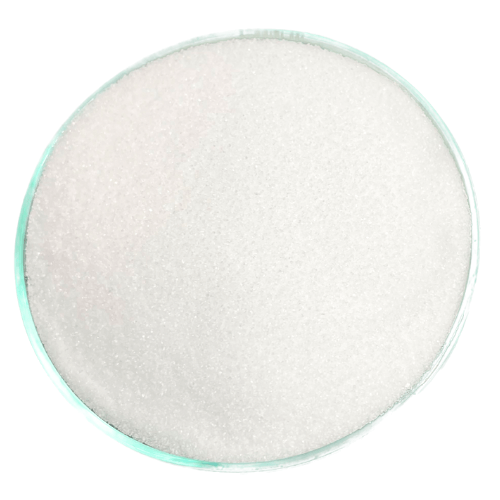
- Appearance: Colourless or white crystals or crystalline powder
- Purity: 99.0–100.5%
- pH: 7.5–9.0 (5% aqueous solution)
- Particle size: Typically 30–100 mesh
Storage & Safety
Store in a tightly closed container in a cool, dry location, protected from moisture.
Avoid inhaling dust and use appropriate protective equipment when handling raw materials.
For further information, refer to the product Safety Data Sheet.
Safety Information:
Share

This is a great additive in CP soaps! No need to add extra lye when aiming for sodium citrate via the citric acid route. Dissolve the required amount in your water before adding the lye and you're set! This option also gives greater control as to how little you require based on your chelating needs. It will boost your lather in hard water situations, and acts as an antioxidant in soap to increase shelf life and reduce the likelihood of DOS / Rancidity. Great to use with sodium gluconate for cleaning or if you have really hard water